
Hospitium
Three Roles, One Problem
Location
Bogotá, Colombia
Services
Product Design · UX/UI
Industry
Healthcare
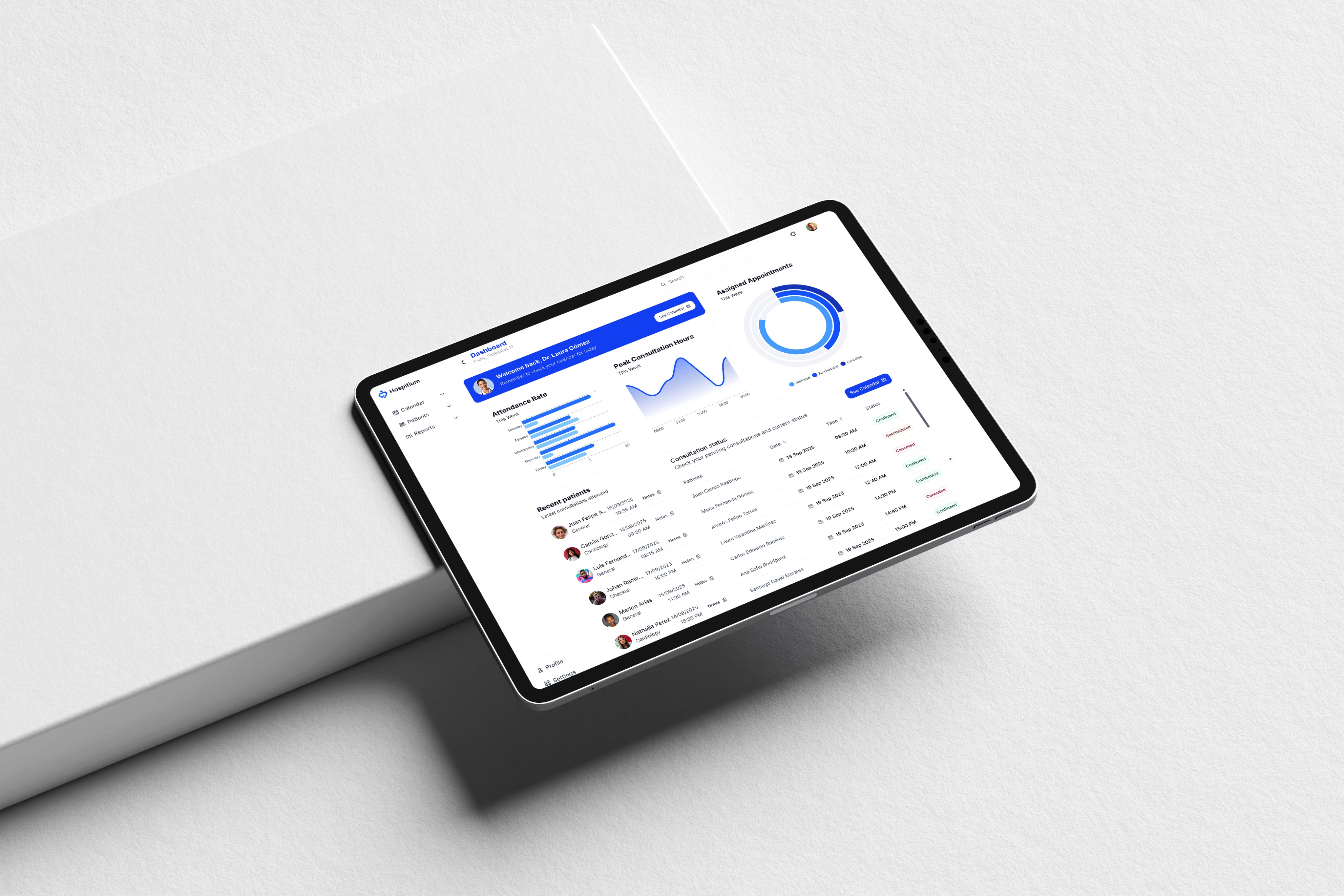
Hospitium centralizes clinical operations for a multi-specialty practice, replacing fragmented paper records and disconnected tools with a single CMS shared by physicians, patients, and administrators.
Each specialist used to see only pieces of a patient's history, this project unified that record behind one permission-based system, without collapsing the distinct needs of each role into a single generic dashboard.

What Changed
These outcomes weren't assumed, they came from watching the product in use. Dashboard metrics tracked appointment volume, attendance rates, and peak consultation hours in real time, and every workflow change was validated through recurring sessions with physicians and clinic administrators before it shipped.
One Shell,
Three Roles
Before any screen was drawn, we mapped a full permission matrix and sitemap across the three roles, down to the level of 'view' vs. 'view your own' vs. 'edit.' That decision let every role share one interface shell instead of three separate products, cutting design and engineering overhead while keeping each dashboard scoped to exactly what that role is allowed to see and do.
Workflow Optimization
Average appointment time dropped from roughly 20 minutes to 12–15, once physicians had exam results, treatment history, and notes in one place instead of switching systems mid-visit.
Patient Empowerment
Patients can now book, track, and review their own care without depending on front-desk staff or phone calls.
Data Centralization
Specialist notes, exam results, and treatment history live in one record instead of being split across paper files and disconnected tools.


Booking Without the Guesswork
Patients booking a visit are often the least tech-confident users in the system.
We collapsed appointment scheduling into a 5-step guided flow , appointment type, search method, doctor, time slot, confirmation, so a first-time patient never has to guess what comes next or call the front desk to finish the process manually.

One Record, Two Readers
The same medical record had to serve two very different readers:
A physician scanning years of clinical notes in seconds
A patient trying to understand their own diagnosis.
We split the record into consistent tabs, consultations, medical history, exam results, clinical notes, and adjusted density and language per role, instead of hiding data behind a stripped-down patient view.

Staffing Without
the Risk
Removing a doctor from the system carries real risk, patients left with appointments and nowhere to go. We timed the task end-to-end and built in a hard stop:
An administrator can't remove a doctor until every pending appointment is reassigned. The same dashboard surfaces doctor availability and demand by specialty at a glance, cutting the time admins spend cross-checking calendars before making a staffing call.

One Flow, Two Jobs
Before a single high-fidelity screen existed, we built step-by-step wireflows for each role and used them to time how long a real task should take, booking a visit, closing an appointment, removing a doctor safely. Those same flows were repurposed as the onboarding walkthrough shown to physicians, patients, and administrators the first time they opened Hospitium, so day-one users were never staring at a blank dashboard wondering where to start

What This Project Taught Me
Hospitium asked me to bring together skills built across years of different projects — building custom UI components, and designing userflows that couldn't follow one path, but had to branch by role while still sharing the same system. The hardest constraint wasn't visual, it was cognitive: color, tags, and icons had to carry meaning at a glance and stay out of the way, because the person on the other end of the screen was never fully looking at it. A doctor, a patient, or an administrator managing a hospital's day has their attention split well beyond the interface.
See More Work
More products, systems, and experiences I've designed.
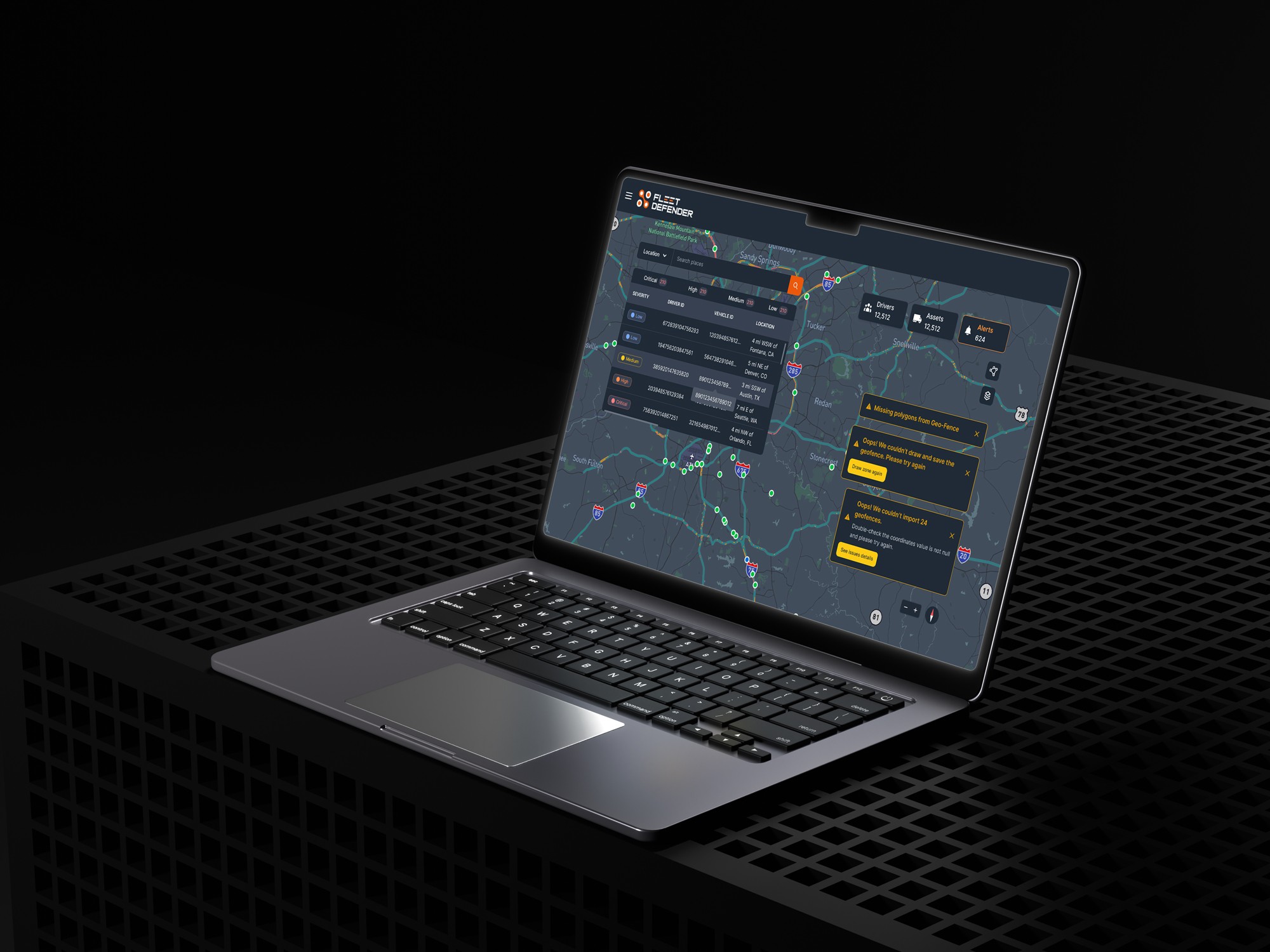
Fleet Defender
Cybersecurity & Fleet Management SaaS
Scaling real-time security for 6,000+ vehicles, reducing incident response and resolution time to under 60 minutes.
B2B SaaS
Data Visualization
Real-time Systems
Security Design
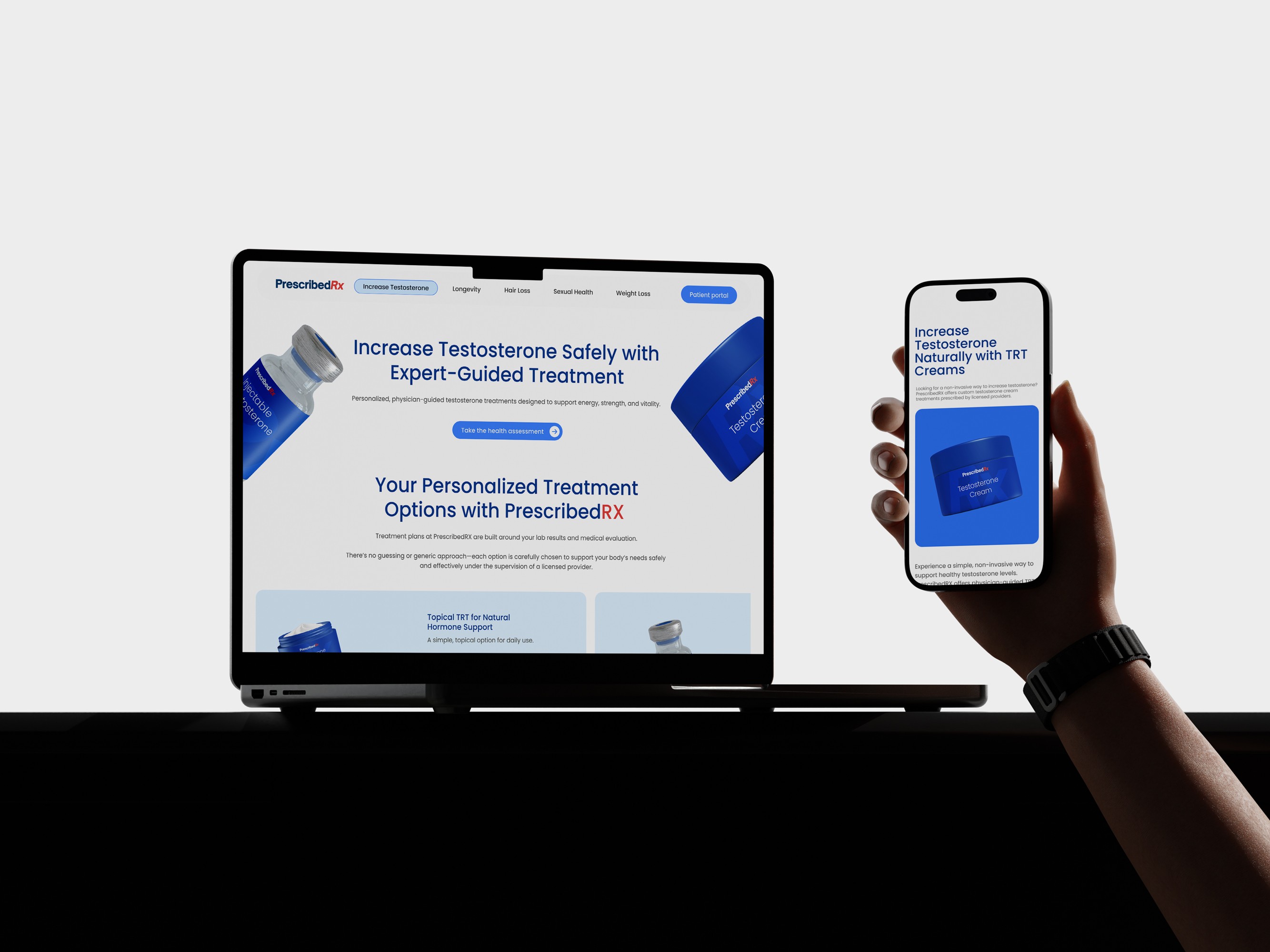
PrescribedRX
Medical Telehealth & E-commerce
Revitalizing a telehealth brand by reducing task completion time by 40% through a streamlined sitemap and a unified digital-to-physical identity.
Health-tech
E-commerce
Brand Identity
Packaging
Let's build something great
Open to new roles and projects. Let's talk.
Menu
Contact
Social Media